
An eleven-member delegation from Saint Vincent and the Grenadines (SVG) is set to join educators, school leaders, policymakers, researchers, development partners, and students from across the region for the 2026 Caribbean Innovation and Leadership Lab (CILL) Education Innovation Forum in St. Lucia.
The team comprises:
Three Ministry of Education officials:
- Mavis Findlay-Joseph – Chief Education Officer
- Aldia Gumbs-Dyer – Senior Education Officer for Curriculum
- Heather McCalmon – Education Officer for Health and Family Life Education
Two principals:
- Suzette Hoyte-Holder – Spring Village Methodist School
- Roslyn Marshall – Calliaqua Anglican School
Five teacher-innovators:
- Mr. Jose Carlos Mendoza Sosa – St. Vincent and the Grenadines Community College (Division of Technical and Vocational Education)
- Linica Miller – Calliaqua Anglican School
- Shekemma Humphrey – Belair Government School
- Azelda Brooker-Charles – Calder Government School
- Kathleen Jack-Payne – Calliaqua Anglican School
SVG Full Potential Country Coordinator:
- Yvette Antoine
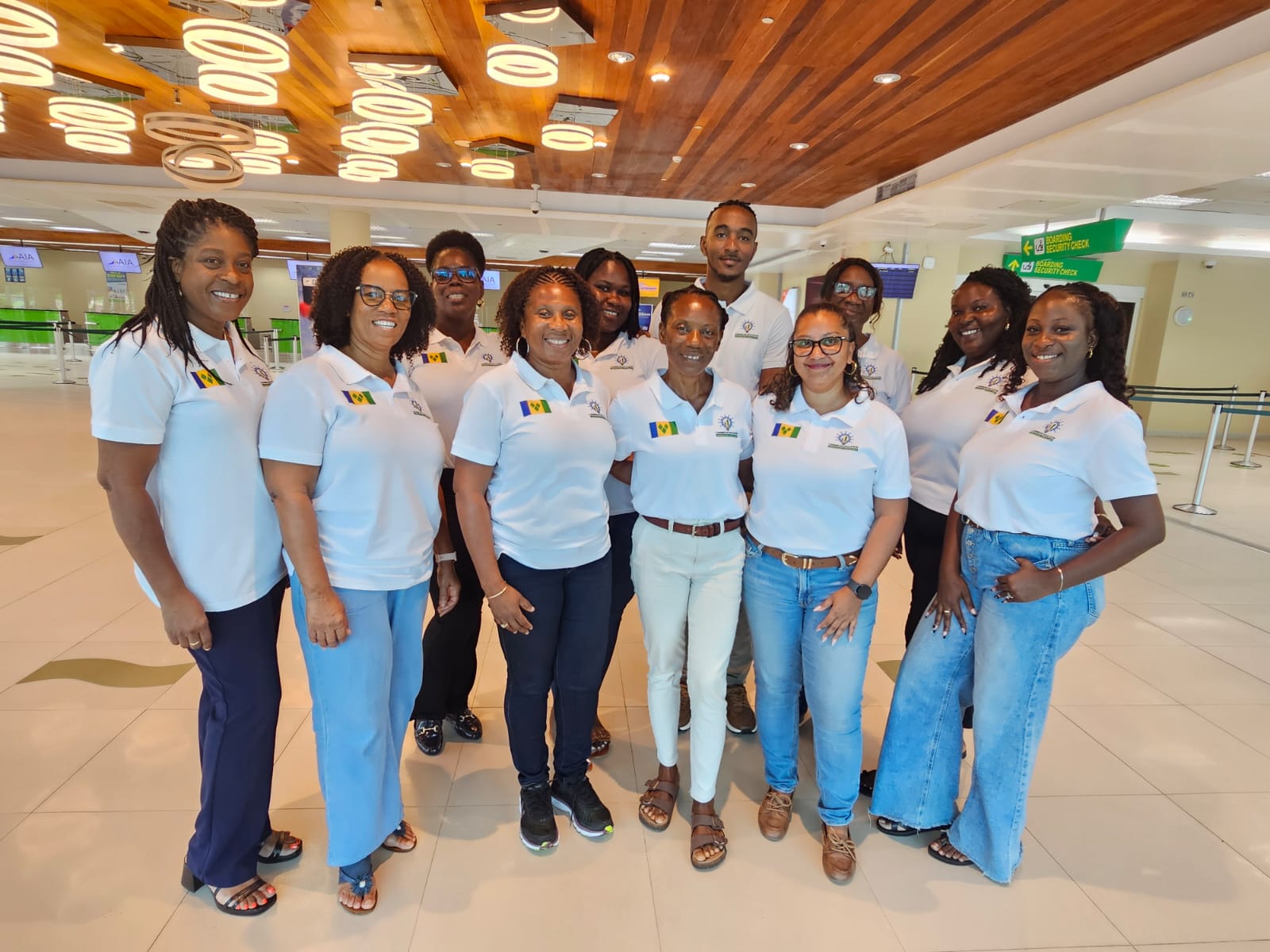
The three-day event, which takes place from 6th – 8th October at the Harbor Club Hotel in Rodney Bay under the theme "Listening to Learners, Designing for Belonging," brings together regional stakeholders to celebrate educational innovation, elevate student voices, and strengthen partnerships to foster more inclusive learning environments.
The delegation’s participation in the forum highlights the ongoing implementation of the Full Potential Programme (FPP) in Saint Vincent and the Grenadines, fully supported by the SVG Ministry of Education, and team members will have the chance to share insights from local prototype portfolios and school-level innovations. In SVG, the FPP continues to focus on cultivating a growing community of educators who are dedicated to creating schools where every learner is seen, heard, valued, and safe.
Key pillars of the FPP implementation in SVG include gender equity and inclusion, gender-responsive pedagogy, student voice and belonging, teacher innovation, anti-bullying, and stronger partnerships among schools, families, and the wider education system.
To date, these efforts have engaged primary and secondary schools across the country, with ten pilot schools successfully completing the Gender-Responsive Pedagogy curriculum and over 300 educators participating in professional learning. Through innovation coaching and school-based innovation sprints, SVG teachers have actively identified real classroom challenges, tested practical solutions, and engaged communities—showcasing how listening directly to learners can reshape educational outcomes.
